Malaysia’s tropical climate, characterized by heavy rainfall, high humidity, and occasional flooding, presents unique challenges for workers in various industries, including construction, agriculture, and logistics. While rain boots are a standard piece of protective gear, wearing them incorrectly—or using low-quality boots—can compromise safety, comfort, and productivity. This article explores essential rain boot safety tips to help workers stay protected, comfortable, and efficient under wet and slippery conditions.
1. Understanding the Importance of Rain Boots in Malaysia
Rain boots, also known as gumboots, are more than just a shield against wet feet. They play a critical role in preventing workplace injuries and health issues, including:
- Slips and falls on wet or muddy surfaces
- Exposure to contaminated water, which may carry bacteria or chemicals
- Electrical hazards in certain outdoor work environments
- Foot fatigue and discomfort from prolonged wet conditions
In Malaysia, where sudden downpours are common and outdoor work often continues despite rain, rain boots are essential personal protective equipment (PPE). Selecting the right boots and using them properly can significantly reduce workplace accidents and health risks.
Find the Perfect Fit for Your Industry
2. Choose the Right Material for Tropical Conditions
The material of a rain boot affects comfort, protection, and durability, especially in Malaysia’s hot and humid climate.
a. PVC (Polyvinyl Chloride)
PVC is waterproof, lightweight, and affordable. It is resistant to chemicals and mud, making it suitable for agricultural, construction, and industrial settings.
b. Rubber
Natural rubber offers flexibility, excellent traction, and good durability. Rubber boots are ideal for areas with constant exposure to water, mud, or uneven terrain.
c. Composite and Hybrid Materials
Some boots combine rubber and synthetic materials for added flexibility, lighter weight, and improved breathability—features that are particularly helpful for workers in tropical climates, as they prevent excessive sweating and discomfort.
3. Ensure Proper Fit and Comfort
Wearing ill-fitting rain boots can cause blisters, fatigue, and even foot deformities over time. Proper fit is essential for long working hours.
- Length and Width: Boots should fit snugly around the calf without being too tight. Ensure there is enough space for toes to move comfortably.
- Arch Support: Long hours standing in wet conditions can strain arches. Boots with built-in arch support or removable insoles can prevent foot pain.
- Breathability: Look for boots with moisture-wicking linings to reduce sweat accumulation and prevent fungal infections in Malaysia’s humid climate.
4. Slip-Resistant Soles for Wet and Muddy Surfaces
Wet and muddy surfaces significantly increase the risk of slips and falls. Rain boots should have:
- Deep treads or cleats to provide maximum grip
- Non-slip materials that maintain traction on smooth or oily floors
- Shock-absorbing soles to reduce strain on knees and ankles during prolonged standing or walking
In Malaysia, construction sites, plantations, and outdoor markets can become extremely slippery during the monsoon season. Slip-resistant boots are therefore critical to maintaining safety.
5. Waterproofing and Water Resistance
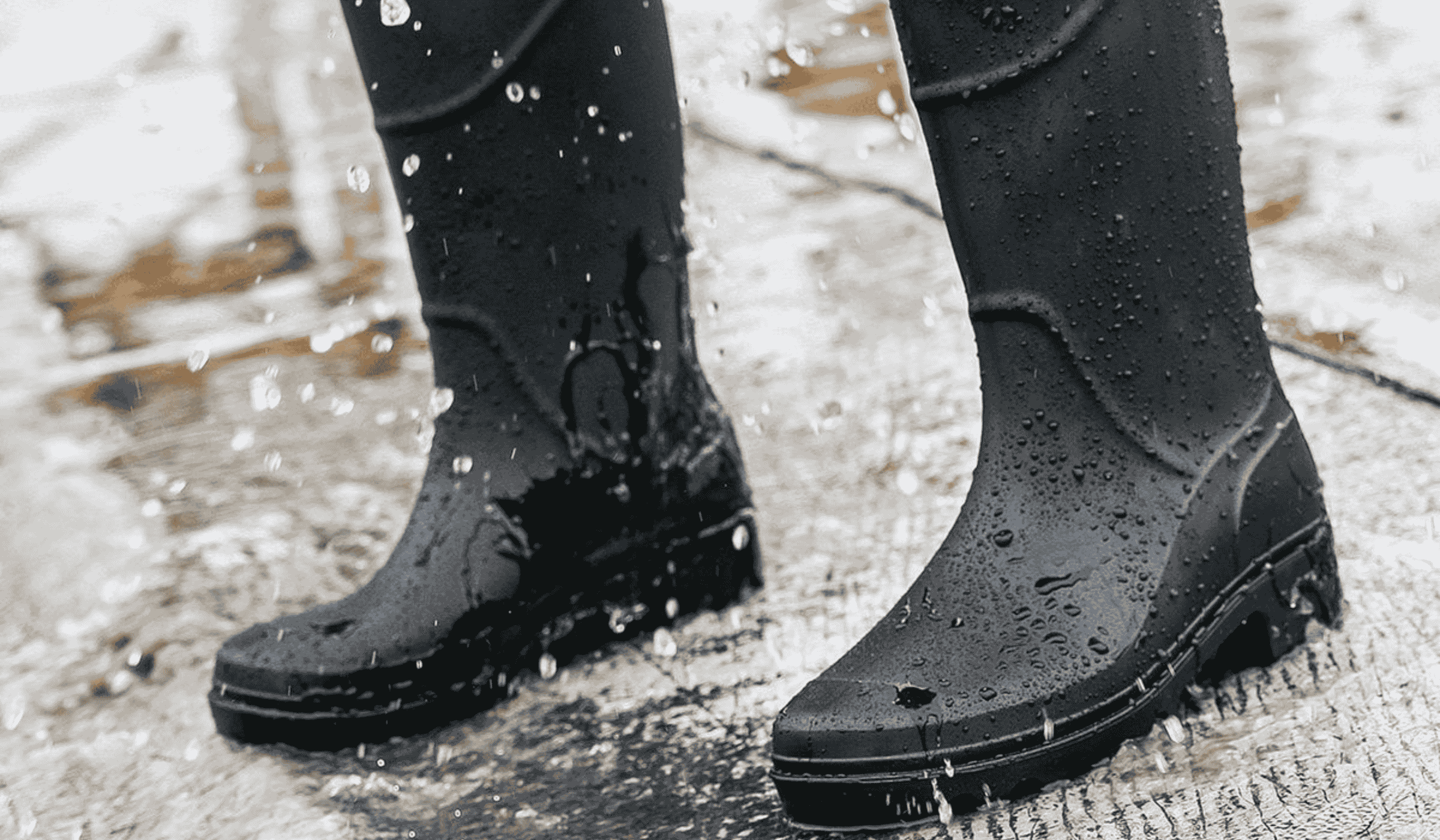
Even though most rain boots are marketed as waterproof, the level of protection varies.
- Seamless Construction: Boots without stitched seams prevent water from seeping in
- High Shaft Height: Taller boots protect legs from puddles, mud, and contaminated water
- Regular Maintenance: Apply waterproofing sprays or conditioners to prolong the boot’s protective properties
Keeping feet dry is not just about comfort; prolonged wetness can lead to fungal infections, rashes, and long-term foot problems.
6. Protection Against Chemicals and Contaminants
Many Malaysian workplaces, including plantations and industrial sites, expose workers to chemicals, fertilizers, or sewage. Rain boots can prevent skin contact and chemical burns.
- Chemical-Resistant Boots: PVC and certain rubber boots are resistant to acids, oils, and other chemicals
- Easy-to-Clean Surfaces: Smooth, non-porous materials allow for quick cleaning to prevent residue buildup
- High Boots for Contamination: Longer boots offer additional protection for legs in high-risk areas
7. Electrical Safety Considerations
Workers in wet environments are at increased risk of electrical hazards. Some rain boots are rated to provide limited protection against electrical shock.
- Insulated Boots: Designed to prevent current from passing through the body
- Non-Conductive Materials: Rubber and certain composites reduce the risk of electrical accidents
- Check Safety Certifications: Ensure boots meet local or international safety standards for electrical hazard protection
Find the Perfect Fit for Your Industry
8. Regular Maintenance and Inspection
Rain boots require ongoing care to remain effective:
- Clean After Use: Remove mud, chemicals, and debris after every shift
- Dry Properly: Avoid direct sunlight, which can degrade rubber; air-dry in a shaded area
- Inspect for Damage: Look for cracks, splits, worn soles, or leaks, as compromised boots reduce protection
- Replace Insoles if Needed: Supportive insoles help maintain comfort during long hours on hard or uneven surfaces
Routine maintenance prolongs the life of boots and ensures consistent safety performance.
9. Proper Usage Practices
Even the best rain boots can fail if worn improperly. Follow these safety practices:
- Wear Boots Only in Appropriate Conditions: Avoid using heavy-duty rubber boots indoors on smooth surfaces, as they may reduce traction.
- Use with Correct Socks: Moisture-wicking or quick-dry socks prevent blisters and excessive sweating.
- Avoid Overloading Boots: Standing in water deeper than boot height can cause seepage and increase the risk of infection.
- Train Workers: Educate employees on proper donning, doffing, and care of rain boots to maximize protection
10. Additional Safety Accessories
Pairing rain boots with other protective gear can further enhance safety:
- Gaiters or Leggings: Provide extra protection in flood-prone areas
- Reflective Strips: Improve visibility during low-light rainy conditions
- Non-Slip Gloves: Complement boots for handling slippery tools or equipment
This accessory is invaluable in Malaysia, where outdoor work continues despite heavy rain and dim lighting.
11. Choosing the Right Rain Boots for Long Shifts
Selecting rain boots for prolonged use requires balancing protection, comfort, and practicality:
- Lightweight Materials: Reduce fatigue during extended wear
- Shock-Absorbing Soles: Protect joints from repeated impact on hard surfaces
- Ergonomic Fit: Minimize blisters, heel pain, and arch strain
- Durable Construction: Ensure boots withstand repeated exposure to water, chemicals, and rough terrain
Investing in quality rain boots ensures workers can perform effectively without compromising safety or comfort.
12. Real-World Insights for Malaysian Workers
- Construction Sites: Boots with slip-resistant soles and chemical resistance are essential on rainy days.
- Plantations and Agriculture: Tall, flexible boots protect legs from mud, water, and pesticides.
- Logistics and Outdoor Markets: Lightweight boots with good traction reduce slips on wet floors while remaining comfortable for long hours.
Each work environment requires slightly different boot features, but comfort and protection remain universal priorities.
Conclusion
Rain boots are more than just a protective accessory in Malaysia’s tropical climate—they are a vital tool for worker safety and comfort. Choosing the right material, ensuring proper fit, prioritizing slip resistance, and maintaining the boots regularly can prevent injuries, reduce fatigue, and enhance productivity. By following these safety tips, both employers and workers can confidently navigate Malaysia’s wet conditions, keeping every step safe, comfortable, and productive throughout long workdays.
Find Your Safety Shoes
KORAKOH Manufactures High Quality Safety Shoes, Industrial Safety Shoes, Safety Boots, Industrial PVC and Rubber Boots. We design, manufacture and distribute high quality PVC Safety Gumboots to suppliers worldwide. Korakoh is also an expert in the design and development of customers own PVC Safety Gumboots, designs and specifications can be tailored to meet the wearers exact needs.